Whooping Crane (Grus americana)
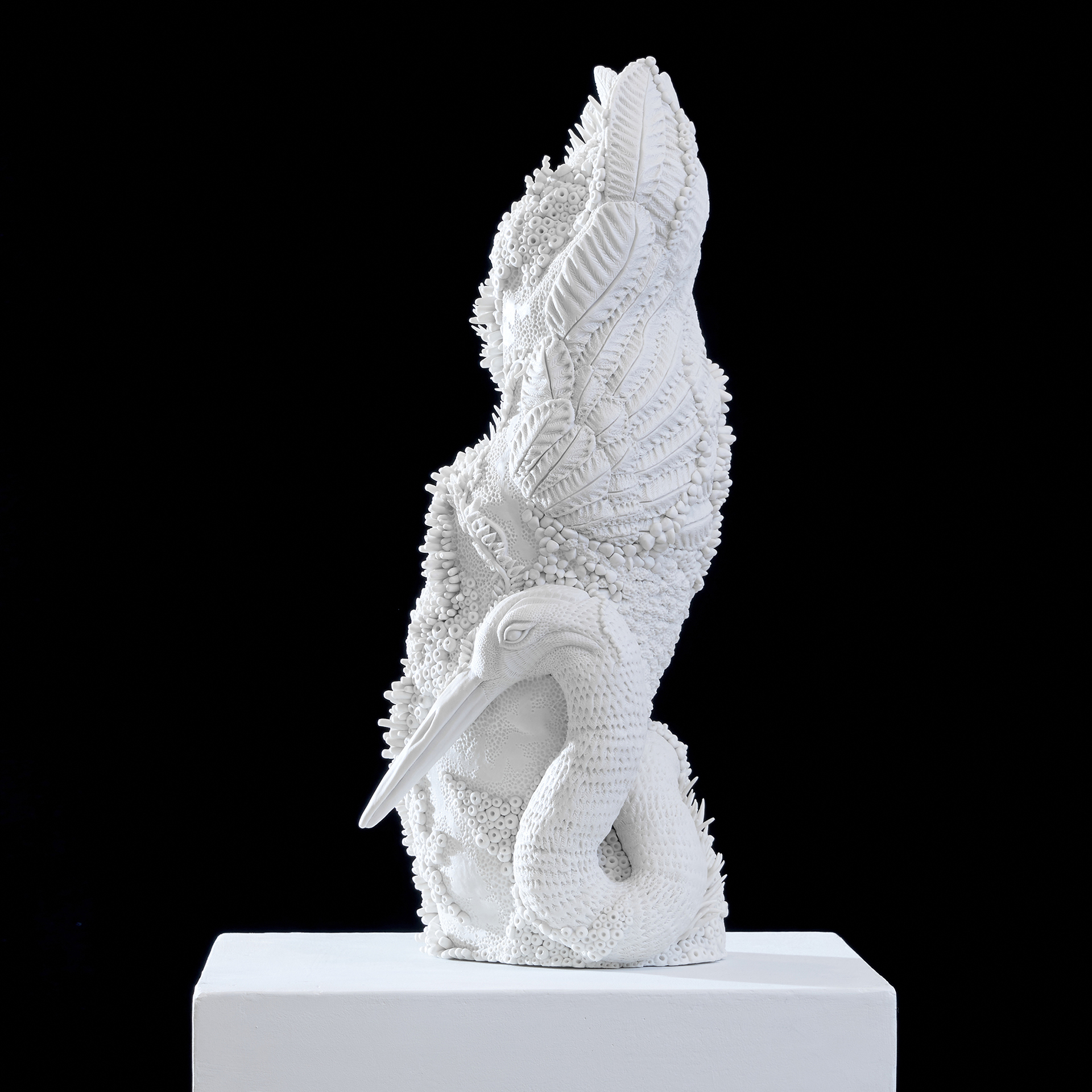
A hand-built porcelain sculpture of a whooping crane, shown being overtaken by ecological succession. Its body is enveloped by hundreds of node-like growths reminiscent of fungi, coral, and plant life native to its habitat. These barnacle-like forms sprout from the crane, dragging it down mid-flight and consuming it. The work reflects ecological succession as the force that reclaims space after species loss—an in-between state where death generates new life, and destruction and beauty coexist.
Piping Plover (Charadrius melodus)
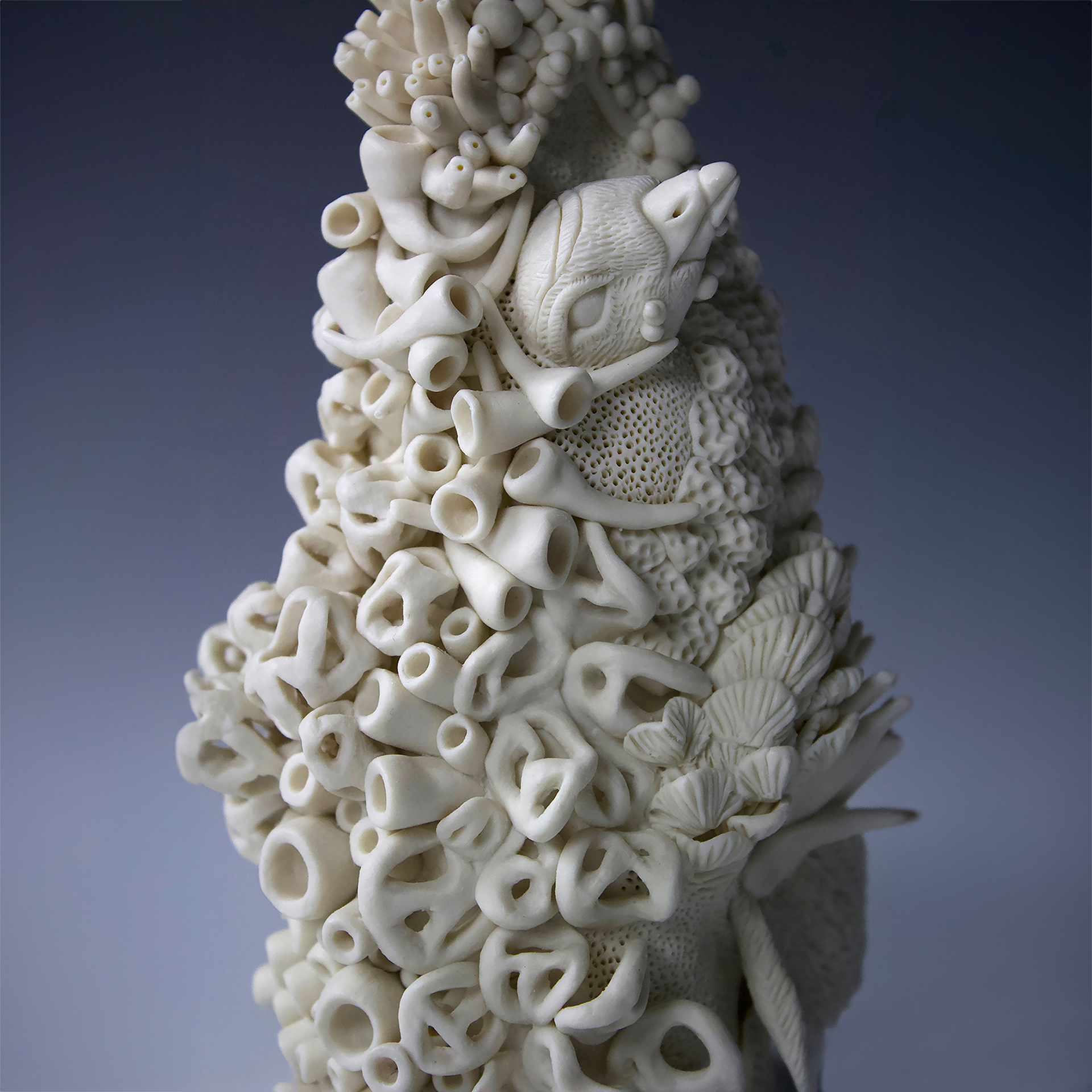
This hand-built porcelain sculpture depicts a piping plover overtaken by ecological succession. Formed from opaque white porcelain, the work emphasizes both intricacy and fragility, evoking humanity’s tenuous relationship with the natural world. Its waxy, alabaster surface recalls bone, while its bleached appearance alludes to coral bleaching caused by rising sea temperatures. Referencing the plover’s coastal habitat, clusters of organic nodes emerge across the bird’s surface, echoing threatened coral systems. These budding, invasive forms—smaller in scale yet visually pervasive—suggest decay and ultimately shape the sculpture itself.
Rufous Hummingbird (Selasphorus rufus)
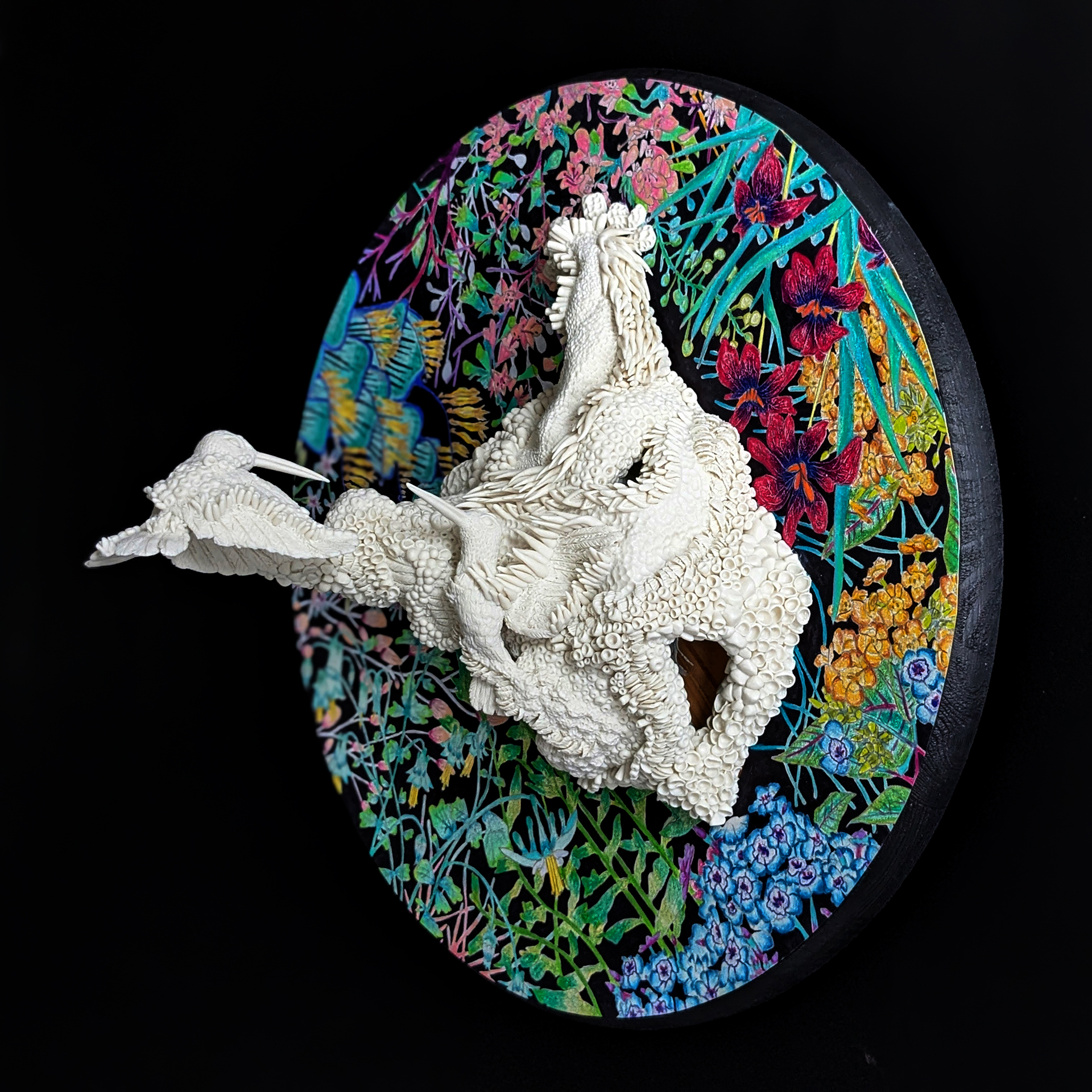
A hand-built porcelain sculpture of two rufous hummingbirds being overtaken by accumulations of ecological succession, mounted on a wooden panel. Behind them, a vibrant backdrop of nectar-rich native plants reflects the ecosystems that sustain the species, contrasting vitality with encroaching loss.
Gunnison Sage Grouse (Centrocercus minimus)
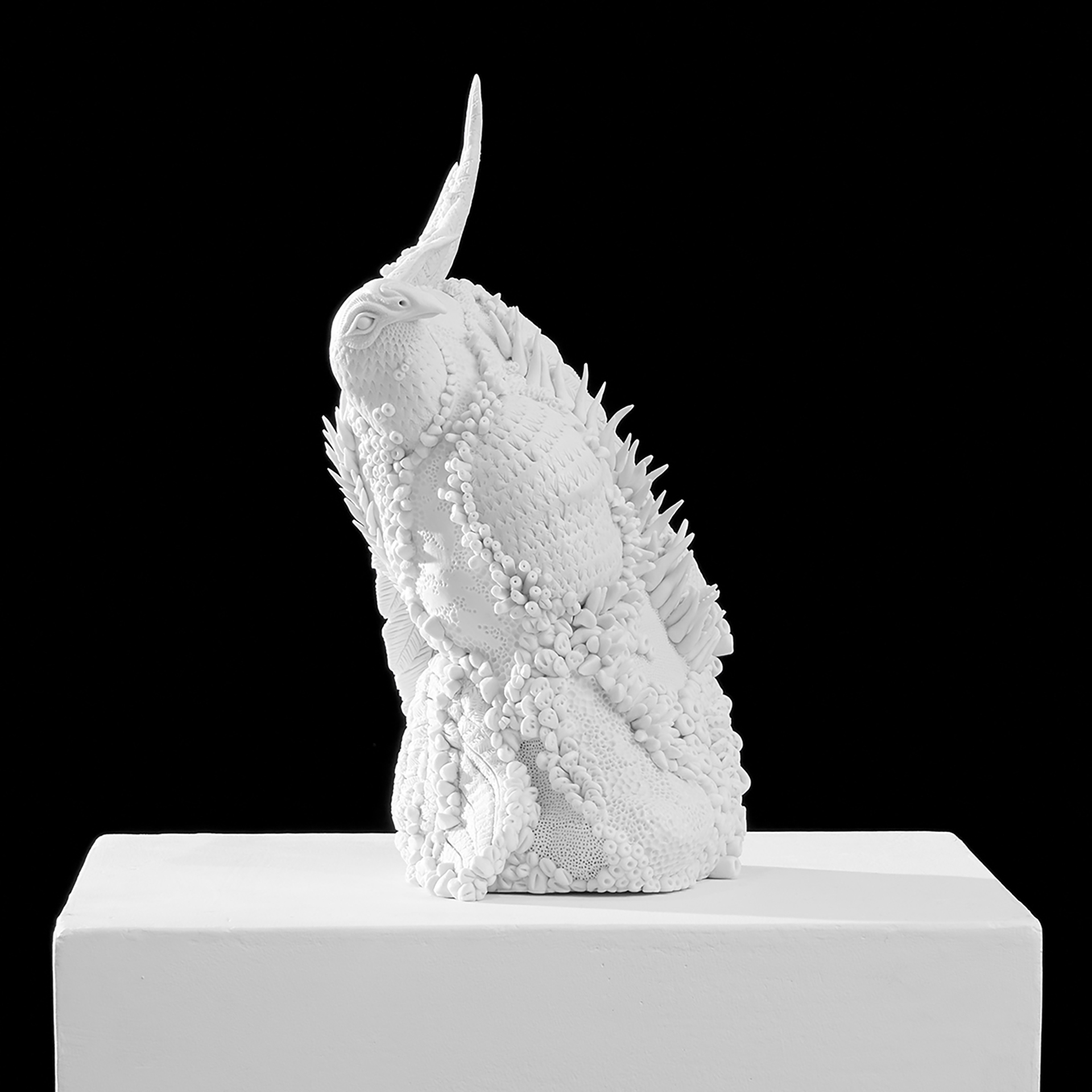
This hand-built porcelain sculpture portrays a Gunnison sage grouse consumed by ecological succession. The proliferating node-like forms engulfing the bird reference relentless human resource extraction and the resulting habitat loss that has driven this species toward endangerment.
Spoon-billed Sandpiper (Calidris pygmaea)
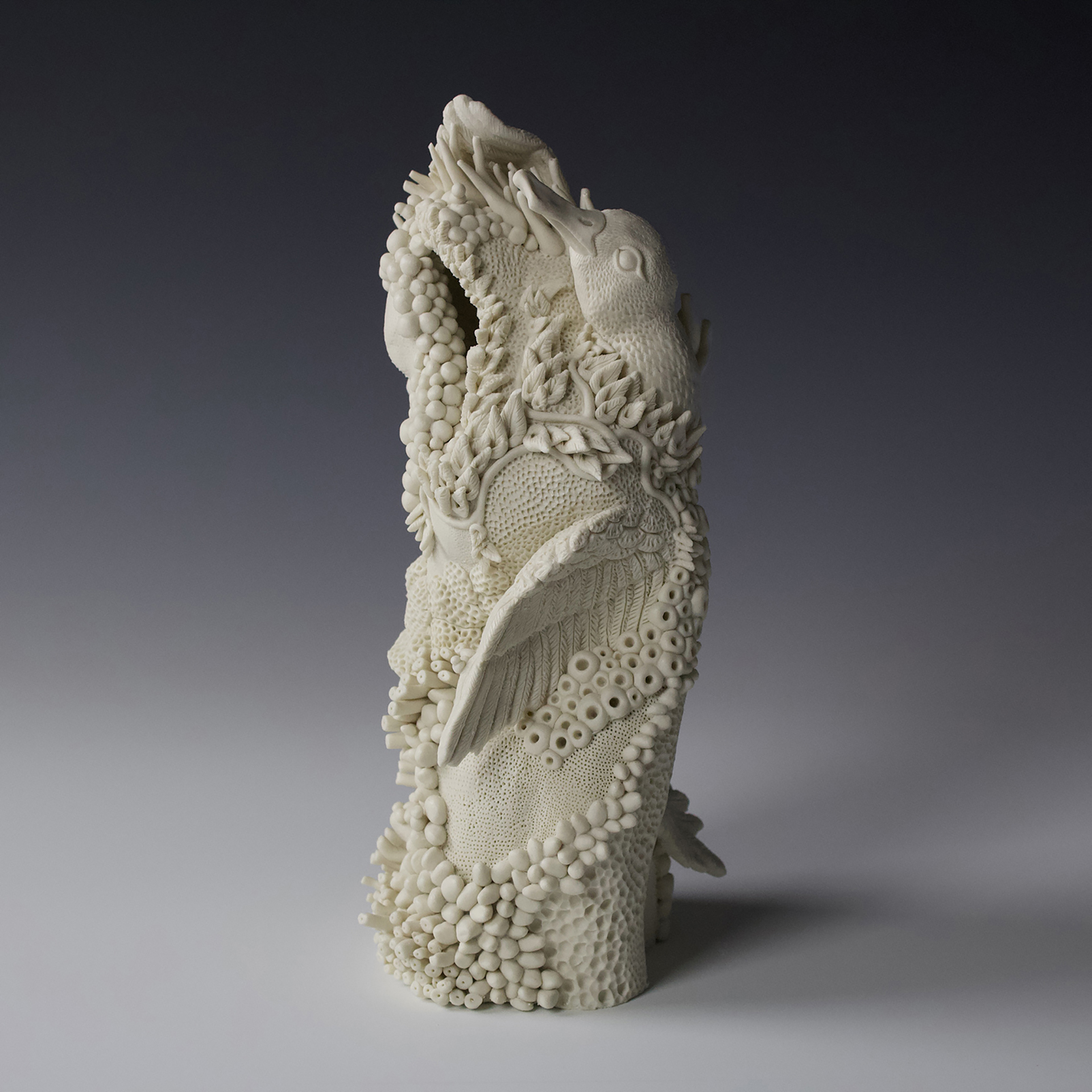
A hand-built porcelain sculpture of a spoon-billed sandpiper engulfed by ecological succession. Only fragments—a wingtip, the curve of a beak—emerge from the dense surface, evoking a sense of drowning. The twisted remnants of the bird suggest simultaneous forces: being pulled into the earth while smothered by invasive growths.
Caged
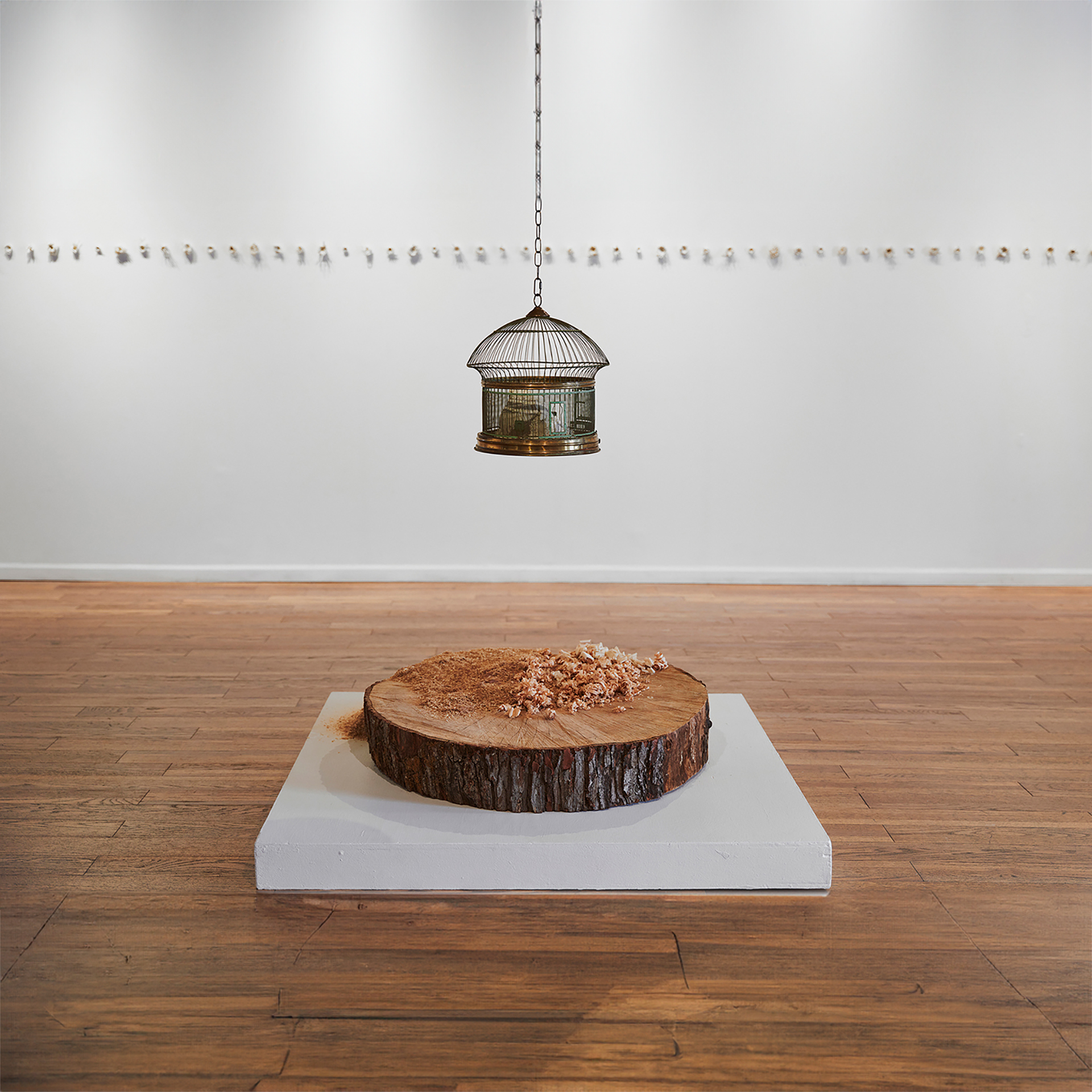
This installation features a hand-built porcelain canary within a birdcage, overtaken by ecological succession. The sculpture rests in a bed of malachite porcelain powder inside the cage, which is suspended above a wooden slab sourced from the forest. Scattered sawdust marks the act of extraction, linking the work to cycles of resource use, confinement, and environmental disruption.
Sandhill Cranes (Grus canadensis)
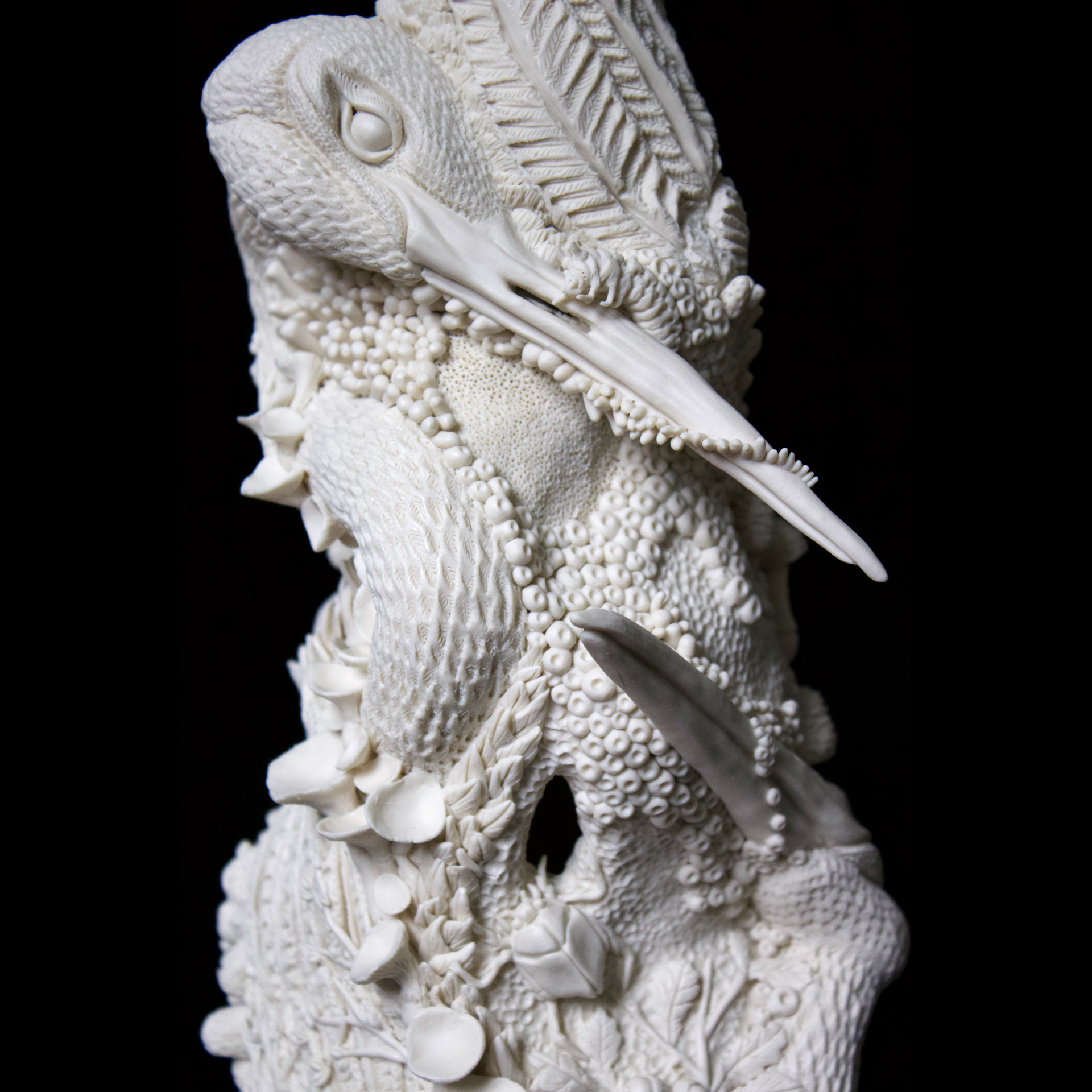
A hand-built porcelain sculpture of two sandhill cranes surrounded by native plants and insects from their ecosystem. Centered on local biodiversity, the work encourages viewers to engage with species they can cultivate within their own communities to support native Ohio bird populations.
Tree Swallow (Tachycineta bicolor) II
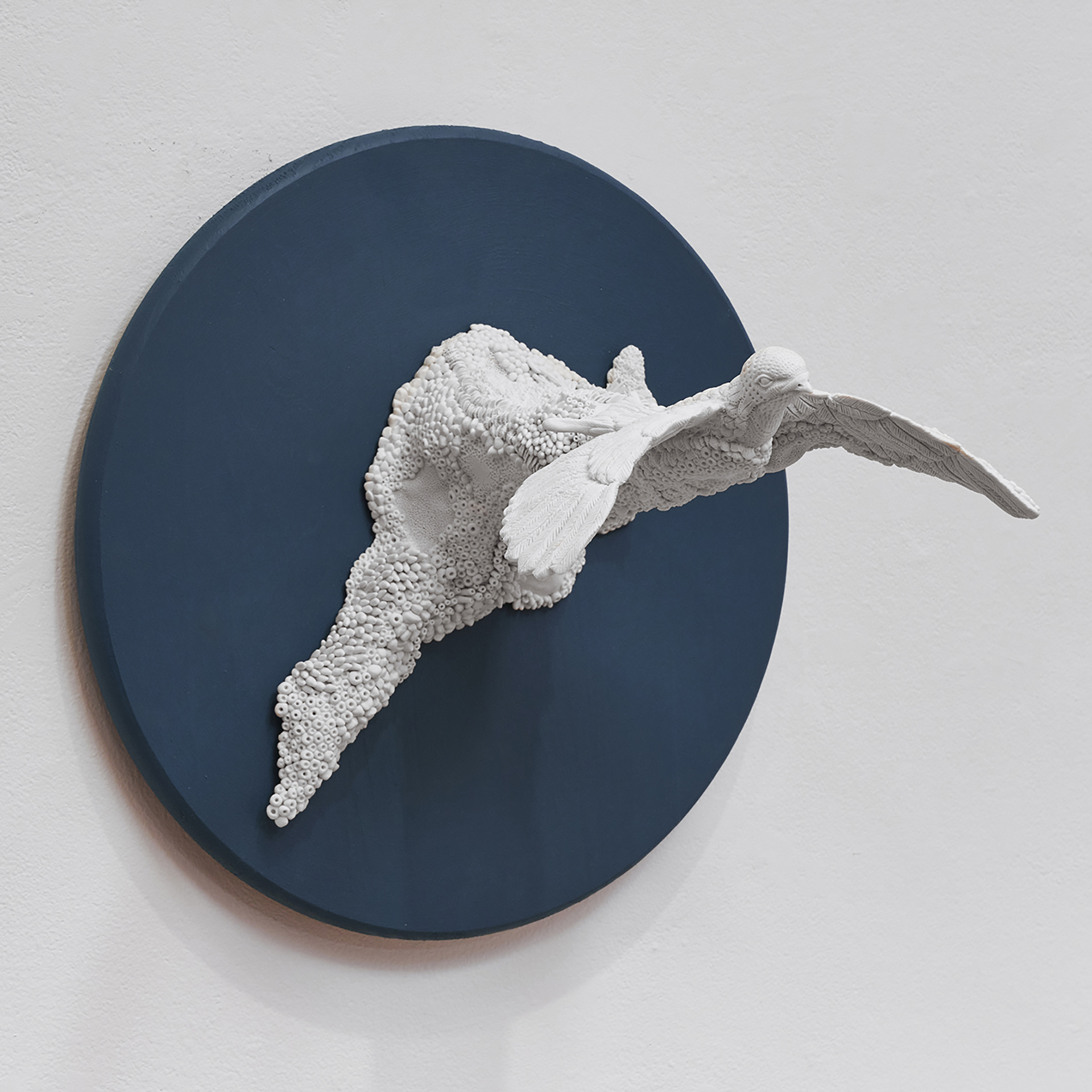
One of three in its series, this sculpture comprises a hand-built porcelain tree swallow emerging from a base of ecological succession, mounted on a wooden panel. The work explores the interconnectedness of living systems and the dependence of organisms on one another within a healthy ecosystem. Each porcelain element is structurally and conceptually interdependent, mirroring the fragile balance of biodiversity. As in nature, damage to one component affects the whole, underscoring both ecological vulnerability and the human role in its preservation or collapse.
Glow-throated Hummingbird (Selasphorus ardens)
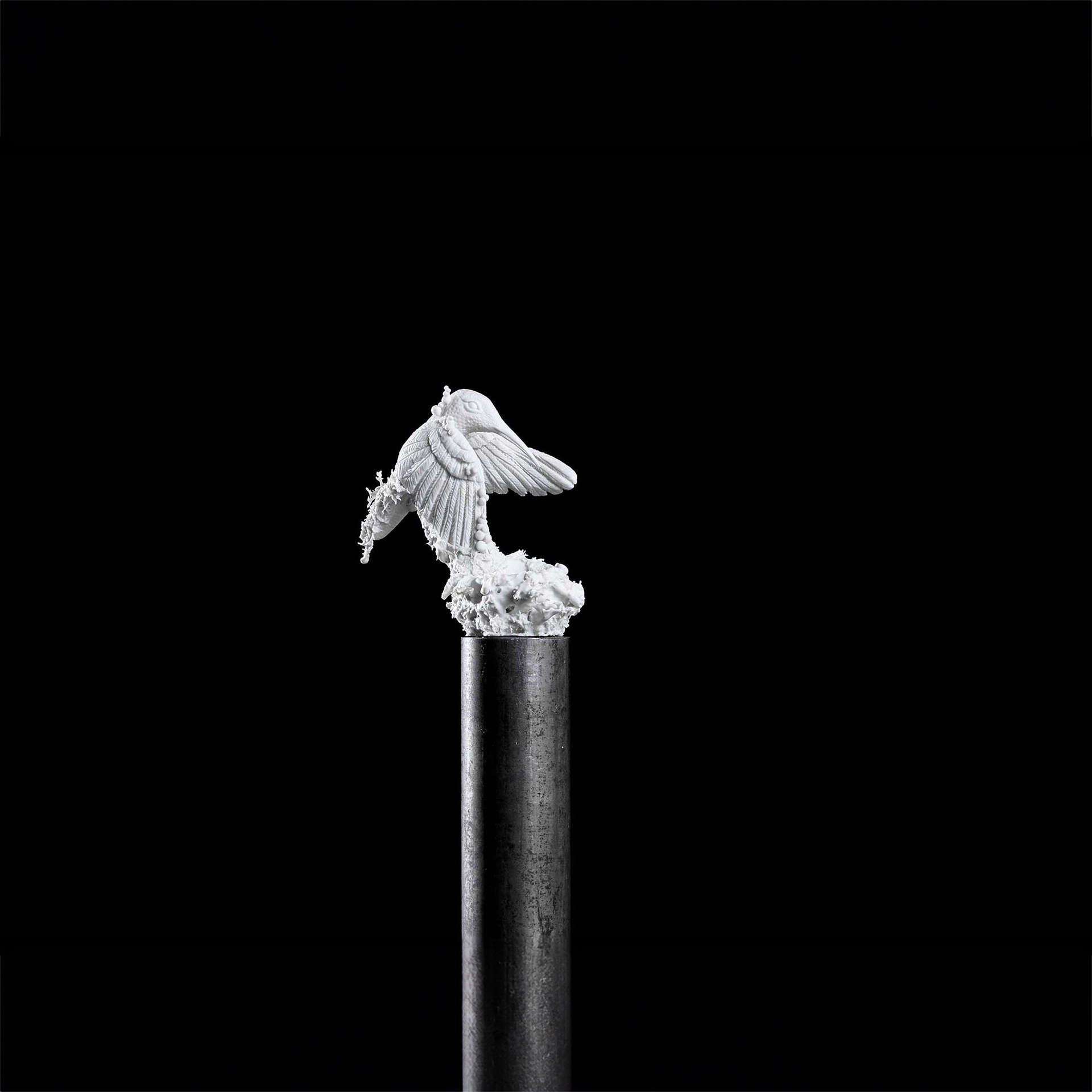
This hand-built porcelain sculpture depicts an endangered glow-throated hummingbird in flight toward an empty nest. The absence of eggs signals loss, while the precarious, unbalanced form suggests imminent collapse. Mounted at eye level on a rigid metal pole, the work invites viewers to confront their physical presence in relation to the fragile bird. The contrast between delicate porcelain and industrial steel highlights the tension between vulnerable ecosystems and the weight of human impact.
Red-crowned Cranes (Grus japonensis)
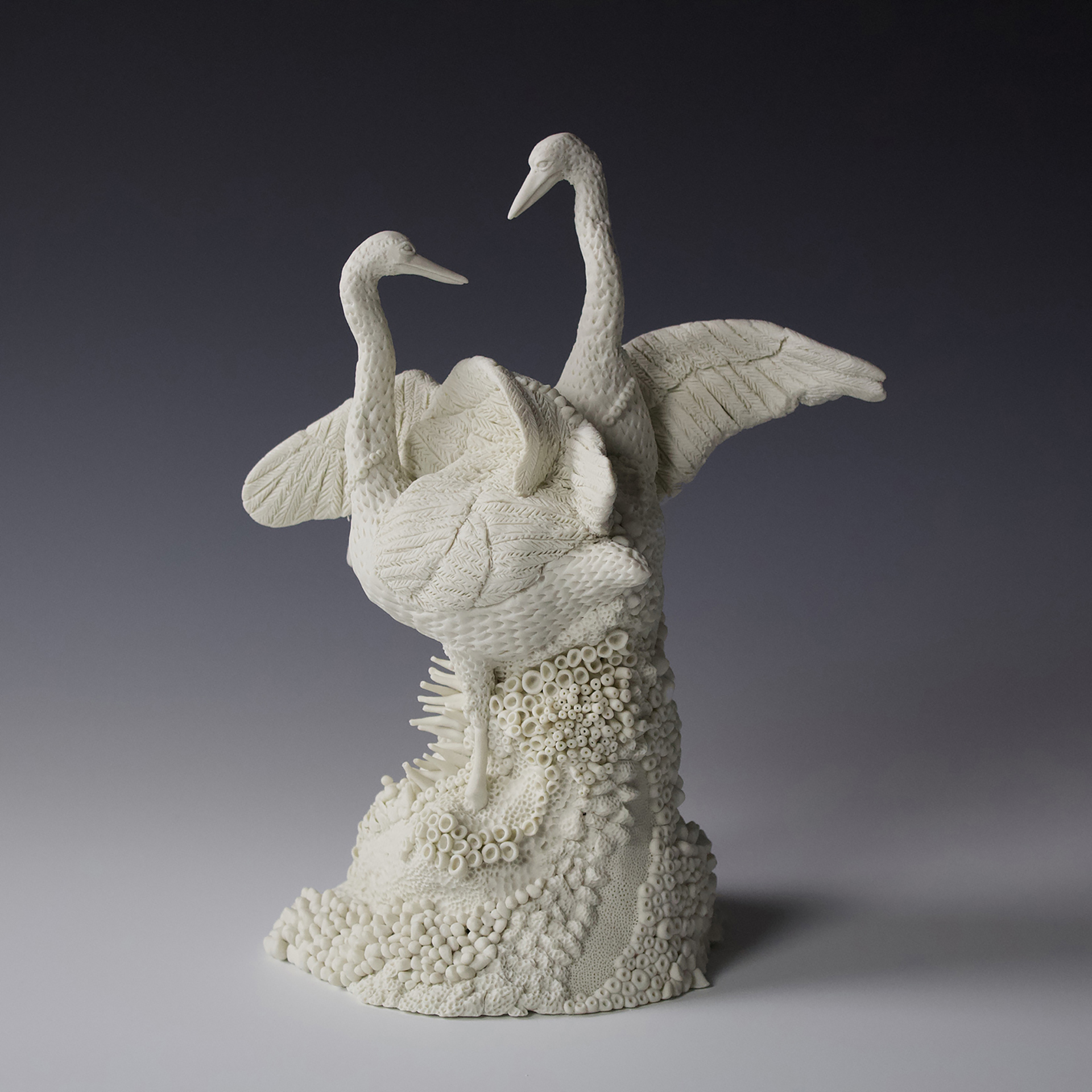
A hand-built porcelain sculpture capturing two red-crowned cranes engaged in their courtship dance, bodies intertwined and eyes locked. As this intimate moment unfolds, ecological succession spreads across their forms, rising from the ground. Node-like growths climb their legs and encircle their bodies, drawing them closer even as they are overtaken.
04/20/2026